AI short video for foreign brands in Malaysia: why it has to be made by a local team
Malaysians discover and buy products through short video, and TikTok's ads alone reach 86.8 percent of the country's internet users. But content made at home and translated rarely lands. Malaysia is three main communities speaking Bahasa Malaysia, English and Chinese, with a Muslim majority and a festive calendar that never stops: in 2027, Chinese New Year falls on 6 February and Ramadan begins only days later. A local team gets the language, the references and the timing right the first time, and AI-assisted production lets it make the volume, in three languages, that Malaysian platforms reward.
At Cosmobeauté this year, a Taiwanese brand owner described the problem better than any marketing deck could. They could not win on price against China, or on brand appeal against Korea, and when they tried to reach new customers overseas, they kept running into a culture they did not yet understand.
For most foreign brands, that gap shows up first in their content. The product gets into Malaysia. The videos that are supposed to sell it were made for somebody else.
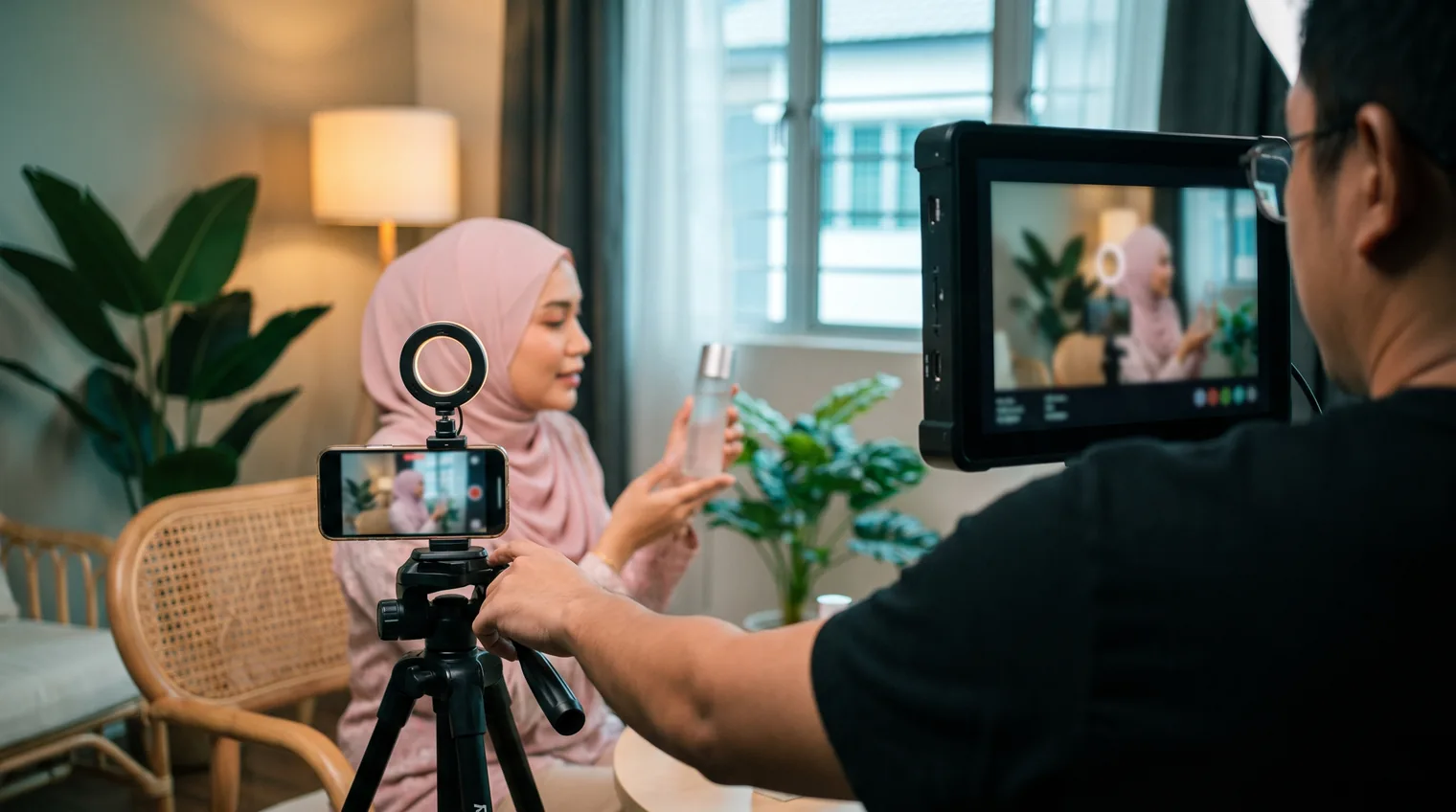
Why translated content fails here
The usual approach is to take what already works at home, add Malay or English subtitles, and post it. It looks efficient. It rarely sells, for reasons that have little to do with production quality:
- The references are wrong. The jokes, the settings, the slang and the problems on screen are someone else's daily life.
- The language is wrong. Malaysians switch between Bahasa Malaysia, English and Chinese, often in one sentence. Subtitled Mandarin made in Taiwan or a polished Korean voiceover reads as foreign immediately.
- The timing is wrong. Content planned on a home-market calendar misses the moments Malaysians are actually shopping for.
- The sensitivities are missed. A scene that is harmless at home can feel careless to a Muslim viewer, or to any of Malaysia's communities.
None of these show up in a production review. They show up as views that never build and products that never move.
Who you are actually talking to
Malaysia is not one audience. According to the Department of Statistics, Malaysian citizens in early 2026 broke down like this:1
| Community | Share | What it means for content |
|---|---|---|
| Malay | 58.3% | Bahasa Malaysia content, Muslim-aware settings and styling, Ramadan and Hari Raya as the year's biggest moments |
| Other Bumiputera | 12.3% | Largely in Sabah and Sarawak, often reached in Bahasa Malaysia and English |
| Chinese | 22.1% | Chinese-language content in a Malaysian voice, Chinese New Year as a major peak |
| Indian | 6.5% | English and Tamil reach, Deepavali as a key season |
English runs across all of them, which is why many brands default to it. English alone, though, leaves most of the emotional connection on the table, especially with Malay audiences, the largest community.
The calendar a foreign team will miss
Malaysia's festive seasons are when the biggest shopping happens, and they move every year. 2027 shows why a home-market calendar does not work here:
| Moment | 2027 date | Content implication |
|---|---|---|
| Chinese New Year | 6 and 7 February2 | Chinese-language reunion and gifting content, planned from December |
| Ramadan | Expected to begin on 8 February2 | Overlaps the end of the Chinese New Year season. Two campaigns, two audiences, running at once |
| Hari Raya Aidilfitri | 10 and 11 March2 | The biggest season for Malay shoppers. Content built for the build-up, not just the day |
| Merdeka and Malaysia Day | 31 August and 16 September | National pride content that speaks to every community |
| Deepavali | 28 October2 | Indian festive content, with gifting and family themes |
| Mega-sales | 11.11 and 12.12, plus monthly paydays | Volume content for the platforms, covered in our mega-sale calendar |
That February overlap is the clearest example. A brand selling to both Chinese and Malay Malaysians needs Chinese New Year content and Ramadan content in market within days of each other, in different languages, with different tones. A team that is not living through it will plan one and miss the other.
The platforms reward volume, not one perfect video
Short video is where Malaysians shop. DataReportal puts Malaysia's internet users at 35.4 million at the end of 2025, with TikTok's ads reaching 86.8 percent of them.3 On TikTok Shop, Shopee and the rest, the brands that win post consistently, often daily, and feed their ad campaigns a steady supply of new creative. We explain why in why your TikTok views are stuck at 200.
Now multiply that by three languages and a festive calendar. A foreign brand trying to run that volume from home, through an agency that has never shopped in a Malaysian mall, is setting itself up to produce a lot of content that misses.
Where a local team and AI production meet
This is the combination that makes the volume possible without losing the local feel. The local team decides what to say: which customer problem, which community, which moment, which words. AI-assisted production makes it practical to turn one idea into versions for each language and each festive season, at the pace the platforms expect. Our view of how to keep that content from looking artificial is in how to make AI video that doesn't look like AI.
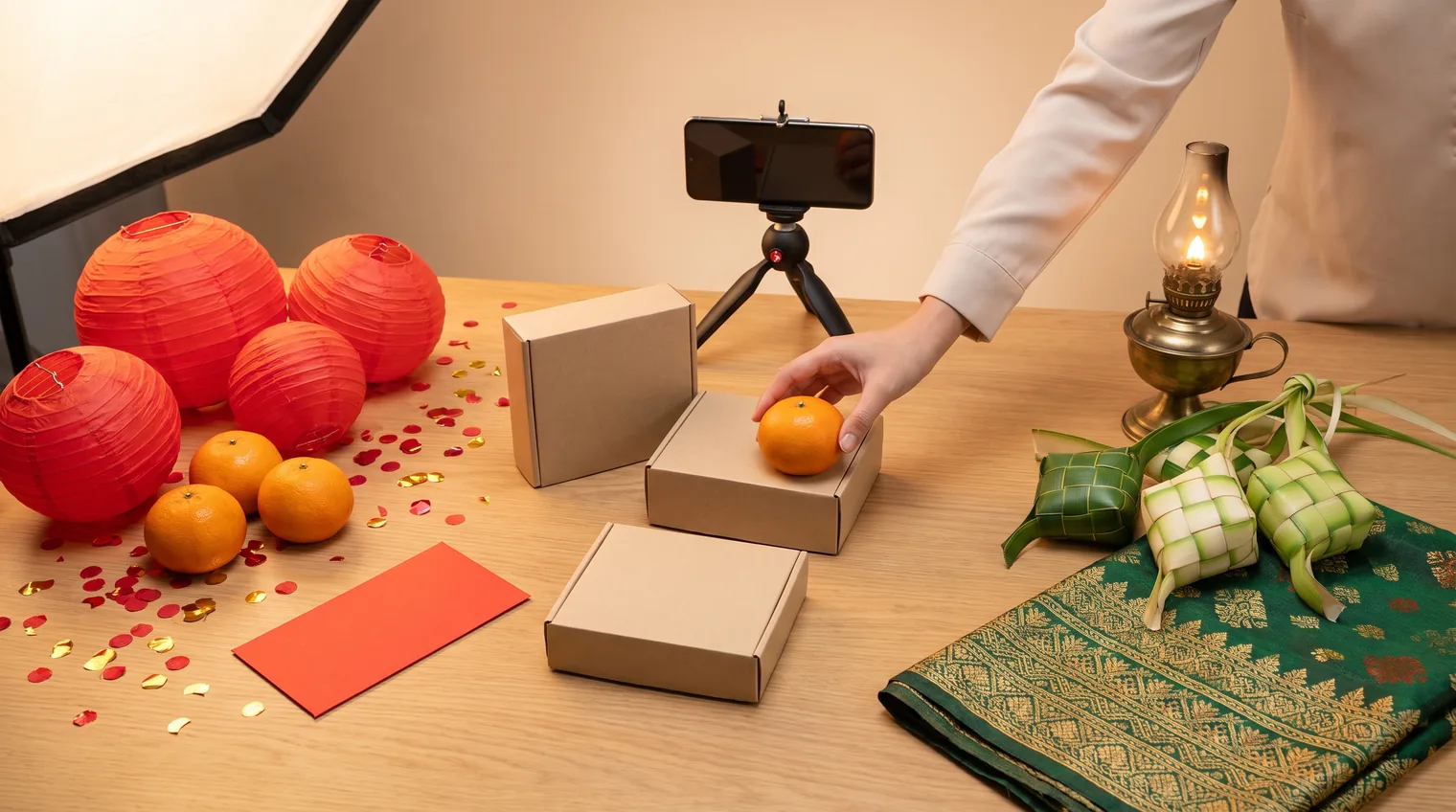
There is a cost argument too, though it is not the one people expect. Producing for Malaysia from overseas usually means paying home-market rates, then paying again to fix what did not land: re-edits, re-shoots, new voiceovers. Making the content here, for here, puts the budget into content that works the first time.

Foreign brands often have a better product than they get credit for here. What they lack is the voice. You cannot borrow it from home and you cannot translate your way into it.
Our team makes content in Bahasa Malaysia, English and Chinese, because that is how Malaysians actually talk. And we plan it on the Malaysian calendar, because that is when they actually buy.
What we do for foreign brands
Foreign brands entering Malaysia can hand us two jobs completely. We produce ad-grade AI short video for the brand's own channels, in all three languages and on the Malaysian festive calendar. And we run the Shopee, Lazada and TikTok Shop stores the content sells into, so the videos and the stores work from one plan. Notification, import and stock stay with your distributor or your Malaysian company; we work alongside them. How the market entry fits together is in how foreign beauty brands enter Malaysia.
If you have been asked to find a content partner for Malaysia
| Ask this | What a good answer includes |
|---|---|
| 1. Who writes the scripts, and where are they based? | A team in Malaysia that understands the audience, not translation of your home-market scripts. |
| 2. Which languages do you produce natively? | Bahasa Malaysia, English and Chinese written by native speakers, not subtitles over one master. |
| 3. How do you plan around the festive calendar? | A content calendar built on Malaysian dates, including overlaps like Chinese New Year and Ramadan in 2027. |
| 4. How do you check cultural and religious sensitivities? | A named review step before anything is published. |
| 5. How many videos a month, and in what formats? | A fixed volume, in formats the platforms reward rather than static slideshows. |
| 6. Who owns the finished files? | You do, delivered to storage you control. |
If you would like to put these questions to us, message us on WhatsApp. We will show you how we would approach your first month of content in Malaysia.
- Translated home-market content rarely sells in Malaysia. The references, language, timing and sensitivities are off.
- Malaysian citizens are 58.3% Malay, 22.1% Chinese, 12.3% other Bumiputera and 6.5% Indian, reached in Bahasa Malaysia, English and Chinese.
- In 2027, Chinese New Year (6 February) and Ramadan run almost back to back. Two campaigns, two audiences, at once.
- TikTok's ads reach 86.8% of Malaysian internet users, and the platforms reward consistent volume.
- A local team plus AI-assisted production makes three-language, festive-ready volume practical.
Quick answers
Why should a foreign brand produce short video locally in Malaysia?
What languages should brand content be in for Malaysia?
When are the major festivals in Malaysia in 2027?
How big is TikTok in Malaysia?
Can AI video work for Malaysian audiences?
How much does it cost to produce a video in Malaysia?
How far ahead should brands plan festive content in Malaysia?
Sources & further reading
- Department of Statistics Malaysia: Demographic statistics, first quarter 2026
- Prime Minister's Department (BKPP): Federal and state public holidays 2027
- DataReportal: Digital 2026, Malaysia
- Videotto: How much does video editing cost in Malaysia in 2026?
- StoryMarvel: Video production cost in Malaysia
Islamic holiday dates depend on official moon sighting and may shift by a day. The content guidance comes from Hansen's own work producing short video for brands in Malaysia.
Bringing your brand's content to Malaysia?
We produce ad-grade AI short video in Bahasa Malaysia, English and Chinese, planned on the Malaysian calendar, for your own channels and your stores.